Professional learning built around your learners, your context, your goals.
A year-long practice partnership for educators who want to use AI in ways that make a real difference, for all learners, not just the confident ones.
Let’s have a conversationThis is not a programme you attend. It is a relationship you work in.
Most AI professional learning right now follows the same pattern. A speaker arrives, demonstrates tools, and leaves. Educators return to their classrooms inspired and unsupported. Nothing changes for learners.
A FutureLearning Practice Partnership works differently. You bring your context, your goals, and your learners. Tim brings deep knowledge of theory, practice, and the realities of AI in Aotearoa education. Together you build capability that is specific, sustainable, and grounded in what actually matters: effective pedagogy, inclusive practice, and equitable outcomes.
The shape of the work fits your school or cluster. It is not a generic rollout. It is not a fixed curriculum. It is a sustained professional relationship designed around where you are and where you want to go.
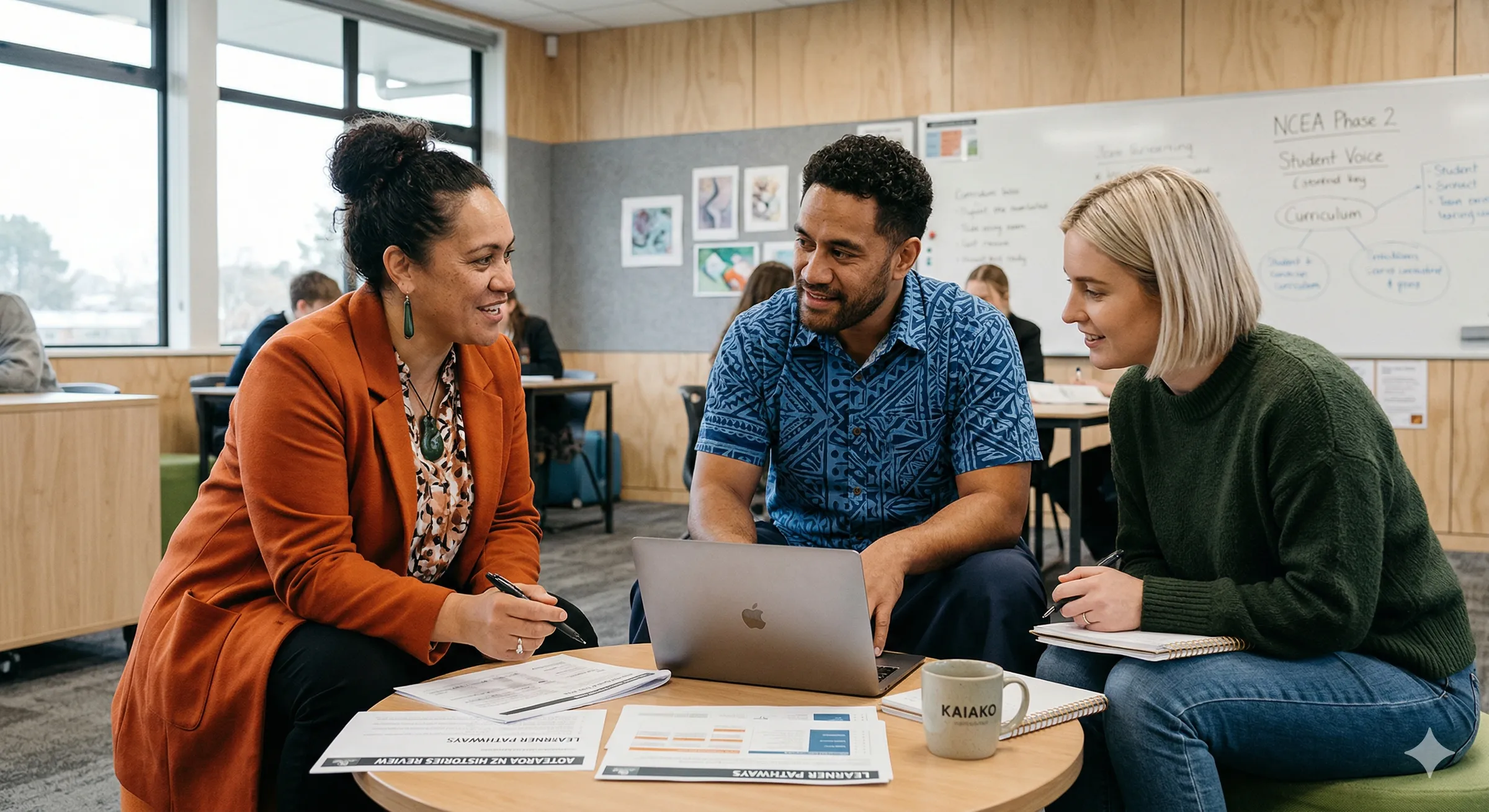
What a year looks like
Each partnership is shaped around your context. These are the elements that stay consistent across all of them.
A shared starting point
We begin with a conversation about your context, your learners, and the goals that matter most to your school or cluster. The partnership is designed from there.
Eight mentored sessions across the year
Two sessions per term, each 90 minutes. Online, structured, and focused on what participants are actually doing with learners. Not hypothetical scenarios.
Peer clinics and case-based discussion
Participants work across schools and clusters, not just within them. Questions come from real practice. Insights are shared and owned by the group.
Building local leadership capacity
A core aim of each partnership is developing middle and local leaders who can carry the work forward inside their school or cluster. Participants are mentored to take on regional and school-based leadership roles in AI practice, building the kind of distributed professional infrastructure that supports whole-sector improvement over time.
A shared collaboration hub
Resources, prompts, workflows, and session recordings sit in a shared space that belongs to participants. What the group builds together, the group keeps.
A capstone hui to close the year
A year-end share-back session where participants reflect on practice shifts, document what has changed, and consider what comes next.
The human element is bigger than the technology.
“Tools matter, but the relationships, values, and professional judgement that surround their use matter more.”
Effective pedagogy, inclusive learning, and equitable outcomes are not a separate conversation from AI. They are the reason the AI conversation matters.
FutureLearning’s approach draws on research about what actually produces sustained practice change, and on a deep commitment to the learners who are most often left behind when new technologies arrive without careful thought. Equity and cultural responsiveness shape the work from the first session to the last.
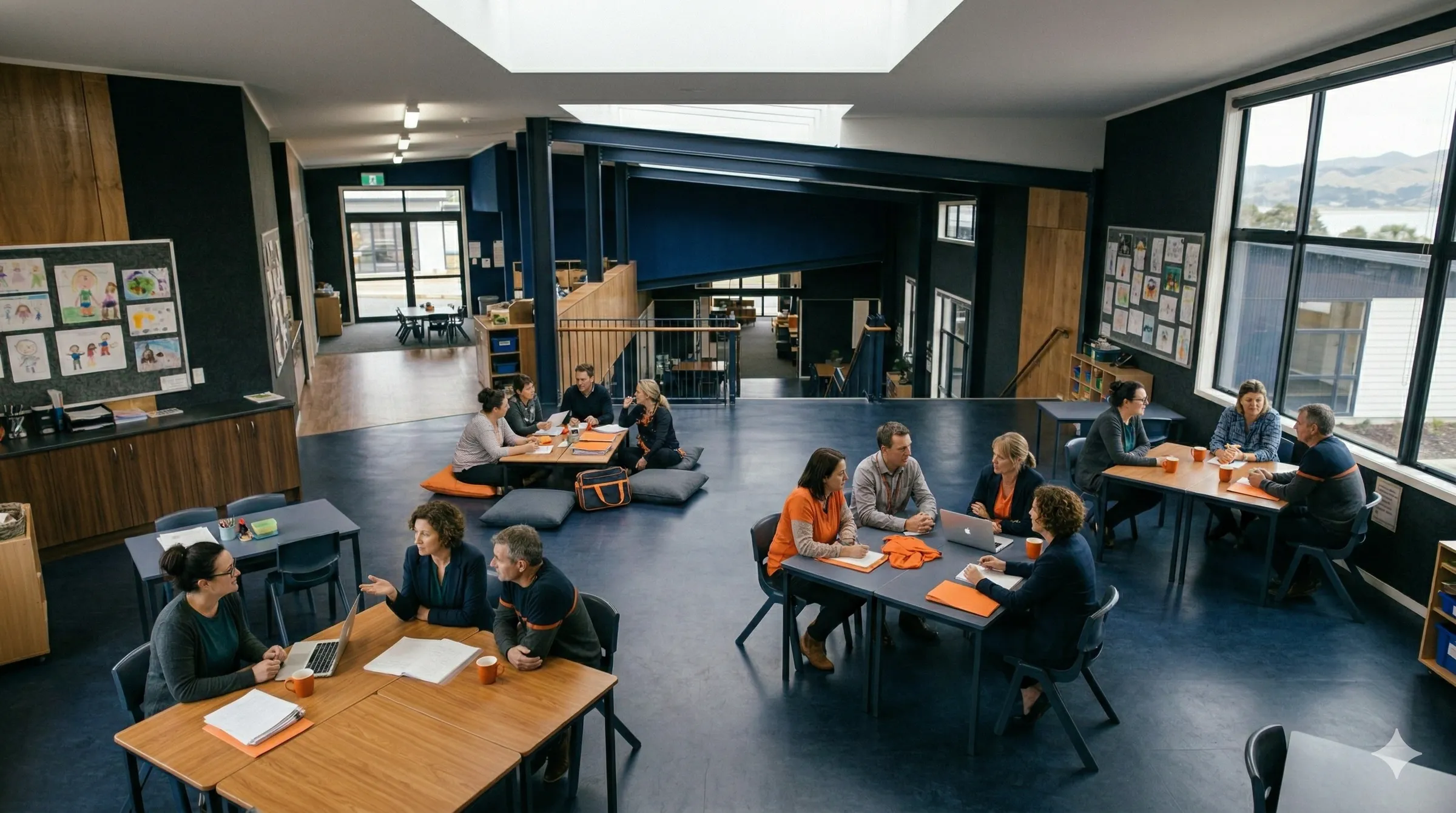
Who this is for
Practice Partnerships are open to any educator or group ready to do sustained work. You do not need to have completed the AI Readiness Review first, though many participants find that a useful starting point.
With the disestablishment of Kāhui Ako, many schools and clusters have lost the structured professional learning connections that supported cross-school collaboration. Practice Partnerships are designed to rebuild that kind of infrastructure, locally owned, practically grounded, and sustained over time.

School and ECE leaders
Leaders building a shared picture of AI across their school and growing the kind of distributed leadership capacity that sustains change after the partnership ends.

Kaiako and classroom teachers
Primary through secondary, wanting to use AI in ways grounded in good pedagogy and their learners’ real contexts. Middle leaders are mentored to carry the work forward inside their school.
RTLB practitioners and cluster managers
Those working with learners with the most complex needs, building AI capability that serves those learners well. Cluster managers are supported to take on local leadership roles within the partnership.

Tertiary educators
Navigating AI in higher education contexts, with a focus on academic integrity, equity, and what genuine learning looks like when AI is present.
Partnerships work best with a minimum of three schools or organisations. Single-school and individual arrangements are considered where context fits. Get in touch to talk through what would work for your situation.
What educators are saying
Feedback from sessions and engagements across Aotearoa, 2024 to 2026.
“I really think this was the best PLD that I’ve had in years. Very relevant to our current situation.”
“The space you facilitated was safe for all. Some shared that they were frightened before today, so how amazing that they are leaving curious and with increased confidence.”
“Incredible day of learning. I was engaged all day, which is sometimes hard after lunch.”
“I found your facilitation excellent, approachable, interesting, non-judgemental and practical. I feel more equipped and confident to experiment using tools I haven’t used before.”
Ready to do something that actually lasts?
I’d love to hear about your school, your learners, and what you’re trying to achieve. No obligation, just a conversation about whether a partnership would be the right fit.
Get in touch